Thursday, June 25, 2009

Maxim on Oliver Reed: "We'll Drink to That"

From the May 2009 issue of Maxim Magazine (UK):

"A tabloid journalist’s dream, Oliver Reed spent a thirty-year career balancing his considerable talent with an irresistible urge to self-destruct. A fine actor, Reed was often irritated by the emphasis that was placed on his drinking above his career. At the time of Oliver!’s success he was one of the highest paid stars in the country, and was reputedly only a whisker away from bagging the part of James Bond, after Sean Connery vacated the role. Inevitably however, his acting would become increasingly overshadowed by his extracurricular activities, with every film shoot seeming to generate another string of debauched anecdotes. And despite what he might occasionally have claimed, Ollie revelled in his notoriety: ‘I’ve always liked being called a hellraiser. The sad thing is that I’m the last of them. There was O’Toole, Harris and I was the baby. Now I’m the only one carrying the baton.’ A baton that has not been carried in quite the same way since. 10 years after his death, we raise a glass to the life of the last Great British hellraiser."

CLICK HERE FOR FULL ARTICLE


I spotted a couple of errors, but all in all, an entertaining mini-biography loaded with great quotes from Ollie.

Monday, June 15, 2009

Tomorrow Never Comes (1978)

Here's a brutal little item for you all, Peter Collinson's 1978 made-in-Quebec crime drama Tomorrow Never Comes. Oliver Reed trots out his American tough guy accent as Jim Wilson, an embittered, burnt-out cop in a corrupt resort town who, on his last day on the force, must deal with an out-of-control hostage situation.

When Frank (Stephen McHattie) returns to town to find that his girlfriend Janie (a bloated Susan George, near the end of her career as a sexpot) is now the mistress of the richest man in town, all heck breaks loose.

After being on the receiving end of a bad beatdown by some local creeps, Frank's clearly not at his best when he goes to Janie's place to confront her. After woozily menacing a gay bellhop and a black maid, Frank draws the attention of a particularly inept police officer who somehow gets shot with his own gun. And the siege is on.

Director Collinson's greatest claim to fame was his stellar work on 1969's The Italian Job, but most of his filmography consists of such unrelenting nastiness as 1967's The Penthouse, Straight On Till Morning (1972), and Open Season (1974), which are all variations on the same basic plot. Quentin Tarantino has professed a special fondness for Collinson's The Sell Out, from 1976, also with Reed.

The film's Canadian pedigree is obvious by the presence of such canuck character actors as Raymond Burr, John Ireland, and Paul Koslo (particularly bad as Reed's cop rival), cast to satisfy the Government requirement that a certain number of featured roles go to natives of the Great White North. Slumming along with Reed are fellow Brits Donald Pleasance (as a tubercular French Canadian doctor) and John Osbourne, the playwright of Look Back in Anger and The Entertainer. Pity Collinson couldn't convince him to doctor the script.

Still, the movie has its moments. The Laval and Montreal locations evoke a sweet '70s nostalgia (for me, anyway), and the close-up of Ollie hoisting a can of Molson Export Ale is one for the ages. The scene where Reed attempts to bring McHattie to justice by drugging his beer is pretty awesome as well, and the downer ending is well-telegraphed if not well-choreographed.

All in all, a decent time-waster that's worth a rental from Netflix.

Tomorrow Never Comes has recently been reissued on DVD in a bare-bones, full-screen edition by Televista Video.

Originally published 4 December 2007 in BLOG! by JM Dobies, and subsequently at Viewpoints.com, where you can read hundreds more of my write-ups, mostly film-related, as well as my reviews of books, local Austin places, various types of junk food, and some damn fine ales.

Tuesday, June 9, 2009

Crossed Swords a/k/a The Prince and the Pauper (1977)

A shorter version of this review was first published at Viewpoints.com, where you can read hundreds more of my write-ups, mostly film-related, as well as my reviews of books, local Austin places, various types of junk food, and some damn fine ales.

1977's Crossed Swords, a/k/a The Prince and the Pauper, is a stellar adaptation of Mark Twain's novel, originally filmed 40 years earlier with Freddie Bartholomew in the title role, and Errol Flynn as Miles Hendon.This version was produced by Alexander and Ilya Salkind, in the tradition of their Three Musketeers films, reuniting several key cast members from those movies: Oliver Reed (as Hendon), Charlton Heston (as King Henry VIII), and Raquel Welch (as Edith, Hendon's true love). Other key roles are played by George C. Scott, Rex Harrison, David Hemmings, Ernest Borgnine, and Harry Andrews. For the record, that makes four winners of the Academy Award for Best Actor (Heston, Harrison, Scott, and Borgnine).

The dual roles of Tom Canty and the Prince of Wales are portrayed by Mark Lester, best known for playing the title character in 1968's Oliver! While Lester isn't up to performance standards of his more esteemed castmates, he's not as bad as some critics suggested at the time.

In one of his last roles as a "sexy leading man," Reed is in top form as Miles Hendon, offering him an opportunity to play a character that Flynn, his idol, had played, and also do plenty of swashbuckling, brawling, and shouting, several things he at which he was quite adept. His comic timing is also excellent: when a villain attempts to stab him, he grabs the man's wrist, remarking "Your fingernails are filthy!" then head-butts the guy into unconsciousness.

Rex Harrison, in one of his last roles, is amusing as the Duke of Norfolk, who runs afoul of King Henry early in the picture. Ernest Borgnine plays Tom Canty's cruel and abusive father with an uneven cockney accent, but physically fits the role to a T.

Crossed Swords was directed by Richard Fleischer, a filmmaker whose output varied from groundbreaking work like 1959's Compulsion and 1968's The Boston Strangler to genre flicks like Soylent Green (1973), Mandingo (1975), and Amityville 3-D (1983). While someone like Richard Lester (who had worked for the Salkinds on the Musketeer films as well as Superman) might have bought a little more flash to the proceedings, Fleischer's direction is workmanlike, getting the job done with a minimum of artifice. There is a timeless quality to the film, which has aged very well despite not being a money-maker upon its initial release. No idea as to why the film was given a much gayer title for the US release. The Prince and the Pauper is not only a better title, it also describes the story a lot better.

The recent DVD release is a bare-bones affair, with no extras to speak of, but it does restore eight minutes of footage cut from the US release, and features a nice widescreen transfer.

Available on DVD from Lion's Gate Home Entertainment at The Oliver Reed Store.

Wednesday, June 3, 2009

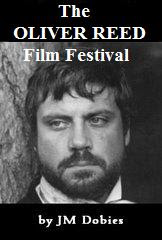
The Oliver Reed Film Festival, Pt. 2: The '70s


In Part One of "The Oliver Reed Film Festival," Ollie rose to fame during the 1960s. By the early '70s, he was considered "The Biggest Star in Britain," as least in his own estimation.

TAKE A GIRL LIKE YOU (1970):
A young schoolteacher (Hayley Mills) comes to a small town in the South of England and before you can say Eric Robinson, a local cad -- Ollie, of course -- tries to get into her knickers. But then competition, in the form of Noel Harrison, rears its ugly head. From the novel by Kingsley Amis.

THE DEVILS (1971):
Reed is mesmerizing as Father Urbain Grandier, a lusty priest who tries to protect his city from an unholy union of church and state fomented by the evil Cardinal Richelieu (see also The Three Muskeeters). Naked nuns, bearing false witness, lead to Ollie being burned at the stake. Ken Russell's masterpiece, unjustly hacked up by the censors. With Vanessa Redgrave as the hunchbacked Mother Superior.

THE HUNTING PARTY (1971):
Ultra-violent western about a famous outlaw (Reed) who kidnaps the wife (Candice Bergen) of a wealthy rancher (Gene Hackman), so that she can teach him to read. She discovers that she likes the outlaw better than her husband, while her husband forms the titular hunting party to track down and kill the outlaw, his gang, and the wife, most bloodily. A metaphor for the Viet Nam war, believe it or not.

THE TRIPLE ECHO a/k/a SOLDIER IN SKIRTS (1972):
During World War II, a pretty boy private (Brian Deacon) goes AWOL to live with his lover (Glenda Jackson), who decides that he should pose as her sister to avoid detection. While in drag, he becomes the object of desire of a brutish cockney sergeant, played with suitable menace by Ollie. Tragedy ensues. Directed by Michael Apted.

SITTING TARGET (1972):
Brutal crime drama a la Get Carter, with Reed as a prison escapee who deviates from his escape plan so that he may kill his cheating wife, played by Jill St. John. With Ian McShane. Can you say "Mayhem ensues"?

Z.P.G. a/k/a ZERO POPULATION GROWTH (1972):
In a totalitarian state of the not-too-distant future, childbearing has been outlawed, but Reed and his wife (Geraldine Chaplin) fight the power by having a baby. Word gets out and Ollie is forced to do violence to the police, his friends and neighbors, in order to protect the child. Inspired 2006's Children of Men.

REVOLVER a/k/a BLOOD IN THE STREETS(1973):
Italian-made revenge drama directed by Sergio Sollima, with Reed as a cop trying to get his kidnapped wife back from some nasty mobsters. One of his best attempts at an American accent. If you like your Ollie in-your-face, yelling a lot and killing people, this one's for you. With Fabio Testi.


THE THREE MUSKETEERS (1973)
THE FOUR MUSKETEERS (1974)
"Oliver Reed is fucking God in this movie" -- Quentin Tarantino
Swashbuckling epic with an all-star cast, including Reed, Richard Chamberlain, Frank Finlay and Michael York as the Musketeers, plus Raquel Welch, Faye Dunaway, Spike Milligan, and Charlton Heston as Cardinal Richelieu. The best sword fights ever captured on film, even if Ollie did nearly kill Christopher Lee, several stuntmen, and himself in the process.

TOMMY (1975):
When I first saw this movie as a 13 year old with a Who fixation, I hated Ollie for not being able to carry a tune in a bucket. Seeing it again 30 years later, I realized that he's the best thing in it, whether he's leering at Ann-Margaret, blowing smoke in Jack Nicholson's face, or kicking Sally Simpson upside the head. Reed's part got bigger and bigger as Keith Moon's got smaller and smaller, probably due to Ken Russell's familiarity with Oliver, and the fact that he could drink himself into stupor at night and show up on time and line-perfect in the morning, while Moonie remained stuporous. Nonetheless, Reed and Moon became bosom buddies, their carousing continuing after both relocated to Beverly Hills. I recently saw the blazer Reed sported in the holiday camp sequence on Ebay going for $2400 US. If I'd had the cash to spare, it would have been mine...

ROYAL FLASH (1975):
Malcolm McDowell plays Harry Flashman, rogue hero of George McDonald Frasier's novels, but Ollie steals the show as Otto Von Bismark. Directed by Richard Lester.

THE SELL-OUT (1976):
Israeli-made spy flick with Reed again cast as an American. It's a tense little tale full of double-crosses and sudden violence. Which is probably why they cast Ollie. "Sudden violence? Get me Oliver Reed!" With Richard Widmark and Gayle Hunnicut.

BURNT OFFERINGS (1976):
After turning down roles in The Sting and Jaws, both of which went to Robert Shaw, Ollie finally went to America for this horror about a house possessed by evil spirits. His character ends up plummeting from the top floor, face first through the windshield of the family car. Co-starring Karen Black and grande dame Bette Davis, who shared with Reed a mutual and thorough dislike.

THE GREAT SCOUT & CATHOUSE THURSDAY (1976):
Reed plays blue-eyed Indian scout Joe Knox, with plenty of bronze make-up and a dialect lifted directly from Jay Silverheels. Worth seeing for the teaming of two legendary booze-hounds -- Olllie and the palimony-era Lee Marvin -- but the film was emblematic of Reed's brief sojourn in Hollywood. He had resisted coming to America because he was the biggest star in Britain, the self-proclaimed "Mr. England," but it was films like this that demonstrated that he had waited a couple of years too long. With Robert Culp and Kay Lenz.


THE RANSOM a/k/a MANIACa/k/a ASSAULT ON PARADISE a/k/a THE TOWN THAT CRIED TERROR (1977)
American International Pictures released this dopey action flick under a number of different titles, and a number of hard-drinking character actors, including Ollie, a sweaty and hungover-looking Stuart Whitman, and Jim Mitchum, the Son of Bob, picked up easy paychecks. With Deborah Raffin.

CROSSED SWORDS a/k/a THE PRINCE AND THE PAUPER (1977):
All-star remake of the Mark Twain classic, reuniting Reed with his Museketeers co-star Raquel Welch and Oliver!'s Mark Lester, who plays the title roles. Great swashbuckling action, with Ollie in top form. Co-starring four winners of the Academy Award for Best Actor: Rex Harrison, George C. Scott, Charlton Heston, and Ernest Borgnine. Directed by Richard Fleischer.

THE BIG SLEEP (1978):
Robert Mitchum returns as Phillip Marlowe in the follow-up to Farewell, My Lovely, but thanks to international financing, and plain laziness, the action is transplanted from '40s L.A. to modern-day London. Reed plays gangster Eddie Mars with scowling menace, apparently as a favor to director Michael Winner, with whom he'd worked on three previous (and much better) films. With Richard Boone, Sarah Miles, Candy Clark, and Joan Collins.

TOMORROW NEVER COMES (1978):
Peter Colinson (The Italian Job, The Penthouse) directed this made-in-Quebec crime drama featuring a mix of British (Oliver Reed, Susan George, Donald Pleasance) and Canadian (Stephen McHattie, John Ireland, and Raymong Burr) actors. Reed trots out his American tough guy accent as an embittered, burnt-out cop who, on his last day on the force, must deal with a hostage situation. The shot of Ollie hoisting a can of Molson Export Ale is one for the ages.

THE BROOD (1979):
Ollie went to Canada to make this shocker with director David Cronenberg, who wrote the film following a bitter divorce and custody battle with his ex-wife. It's all about a crazy bitch, played by Samanth Eggar, whose rage manifests itself by giving birth to malevolent dwarves who kill anyone she perceives to be a threat to her happiness. The reveal of her exo-womb is still mighty disturbing. Reed is great, though aging fast, as her psychotherapist, Dr. Raglan, who inevitably dies badly at the hands of the title characters. With Art Hindle.

Originally posted in BLOG! by JM Dobies on 16 August 2007.

Stay tuned for The Oliver Reed Film Festival, Part Three: The '80s 'Til Death.

Friday, May 29, 2009

The Curse of the Werewolf (1961)


The 1961 Hammer Films production of The Curse of the Werewolf, directed by Terence Fisher, marked Oliver Reed's first starring role, even if Clifford Evans got top billing. It is also one of my favorite Hammer horrors, and my favorite werewolf movie of all time.

After Hammer had put its unique stamp on Frankenstein, Dracula, and the Mummy, it was inevitable that the studio would make its own variation on The Wolf Man. When a proposed co-production about the Spanish Civil War fell through, the ever-frugal Hammer executives ordered a script to make use of the sets that had already been built. Producer Anthony Hinds adapted Guy Endore's novel The Werewolf of Paris, writing the script under the pseudonym John Elder, transplanting the action to 18th century Spain. The result is an atmospheric, grim little tale of lycanthropy, good vs. evil, and the horrors of adolescence. Or as the ads for the fim so colorfully put it, ‘He fought the hideous curse of his evil birth, but his ravished victims were proof that the cravings of his beast-blood demanded he kill… Kill… KILL!’

Unlike Universal's Wolf Man films of the '40s, The Curse of the Werewolf does not hold back on the sex and gore, especially in the version released in the US, which contained scenes the British censors had ordered excised from the film (it is this version which is included in the Hammer Horror Series DVD boxed set, available HERE). The werewolf's origin story is particularly twisted, as Leon is the bastard offspring of a feral lunatic rapist and the town jailer's deaf mute daughter, played by the Yvonne Romain. When she dies in childbirth, Leon is adopted by the kindly Don Corledo, and after an uneventful childhood, develops an unnatural bloodlust at the onset of puberty, allong with an overwhelming urge to roam the countryside disemboweling area livestock.

Trapped in a world he never made, Leon inevitably graduates to killing humans as things go horribly wrong with a local prostitute, when in the middle of a "date," Leon turns into a werewolf and rips her throat out.

Only true love, it seems, can cure Leon's full moon fever, and it arrives in the second act in the person of the lovely Catherine Feller as the virginal Christina, who loves Leon despite the occasional lycanthropic mayhem and savagery at the local bordello. But when the bodies start piling up, the local authorities are forced to take action.

From the opening scene, the recurring theme is cruelty: the cruelty of life, the cruelty of fate, and the cruelty of the ruling class, for it is the cruelty of one particularly nasty noble that sets Leon's fate in motion. In his highly insightful essay for Cinemafantastique, Steve Biodrowski writes that The Curse of the Werewolf "plays out like a deliberate piece of Theatre of Cruelty, in which most of the sympathetic characters come to a tragic end. The result is not especially frightening, but undeniably effective, in a depressing sort of way."

Quite true, as Hinds's bleak view of humanity pervades the film, and subsequent Hammer horrors, such as Evil of Frankenstein, for which he provided the screenplays. Terence Fisher gives the film that iconic Hammer feel, with great color cinematography by Arthur Grant.

Oliver Reed, though raw, and a bit over the top at times, is riveting. He manages to capture Leon's torment while still projecting the charisma that would make him an international star. His performance, and the vivid production values, easily make this my favorite werewolf movie -- well ahead of The Wolf Man, even if that film came first. Lon Chaney's Lawrence Talbot is just a mopey lummox with a death wish, while Reed's Leon combines danger and vulnerability to make for a much more compelling character. Talbot is basically suicidal, while Leon wants to live. And therein lies the tragedy.

The Curse of the Werewolf makes a fine double feature with either 1958's Horror of Dracula, starring Christopher Lee, or Paranoiac, from 1963, a sub-Hitchcock psychodrama featuring another early performance from Reed.

For further reading, check out Steve Biodrowski's essay on The Curse of the Werewolf at Cinemafantastiqueonline.com.

Saturday, May 2, 2009

The Oliver Reed Film Festival, Pt. 1: the '60s


THE CURSE OF THE WEREWOLF (1961):
Ollie stars as a a young Spanish nobleman with a problem: he keeps turning into a wolf and disemboweling people. The film that led indirectly to Ollie getting his face slashed with a broken bottle in a bar fight in 1964. With Clifford Evans and Yvonne Romain.

PARANOIAC (1963):
Sub-Hitchcock hoo-hah with Reed as a creepy rich kid out to make sure he collects on his inheritance -- even if it means murder! My favorite (and most prophetic) line of dialogue: "I've been drinking. Now I'm going to drink some more."

THE DAMNED a/k/a THESE ARE THE DAMNED (1963): Not to be confused with Luchino Visconti's 1970 epic, this is a sort-of sequel to VILLAGE OF THE DAMNED and CHILDREN OF THE DAMNED with Reed playing "King," a nasty ruffian who inevitably meets a bad end. An interesting combo of horror, sci-fi, juvenile delinquent and nuclear holocaust-type flicks from director Joseph Losey. With MacDonald Carey, Viveca Lindfors and Shirley Ann Field as the object of Reed's incestuous jealousy.

THE SYSTEM a/k/a THE GIRL-GETTERS (1964):
Reed plays Stephen "Tinker" Taylor, a womanizing photographer in a seaside resort who gets his comeuppance when he falls for an upper-class fashion model named Nicola. Directed in living black and white by Michael Winner, from a screenplay by Peter Draper. Great theme song by the Searchers. With Jane Merrow, Harry Andrews, and David Hemmings.

THE PARTY'S OVER (1965):
Reed plays "Moise," the leader of a pack of layabout no-goodniks called, appropriately enough, "The Pack." A wealthy young American girl falls into their orbit, and tragedy ensues. Ollie is mesmerizing as the charismatic, nihilistic would-be beatnik whose idea of a miracle is a girl who won't go to bed with him. Director Guy Hamilton (Goldfinger) tried to have his name removed from the credits after the British censors made heavy cuts. With Eddie Albert.

THE DEBUSSY FILM (1965): In his first collabration with director Ken Russell, Reed plays two roles, one as a dead ringer for French composer Claude DeBussy, and the other as a brooding young actor not unlike Ollie himself, who is cast as DeBussy. Audacious work foreshadows the brilliance of The Devils (1971). Russell and Reed developed a shorthand for Ollie's acting range: "Moody One," Moody Two," and "Moody Three," ranging from quiet menace to bellowing rage.

THE TRAP (1966):
Surprisingly tender adventure tale about a French-Canadian fur trapper who buys a deaf mute (Rita Tushingham) to be his bride. Ollie's accent varies wildly, at times spot-on, other times sounding more like a brain-damaged Belgian.

THE JOKERS (1966):
Reed's second collaboration with director Michael Winner, from a script by Dick Clement and Ian LaFrenais, fresh off the BBC series "The Likely Lads." Two brothers plot to steal the Crown Jewels, but just for kicks. Co-starring Michael Crawford as Reed's ne'er-do-well younger brother. Hasn't aged particularly well, but proved that Reed could do comedy.

DANTE'S INFERNO (1967):
Early Ken Russell effort made for British Television with Oliver as Dante Gabriel Rosetti. Creepy opening scene has him exhuming his wife's buried remains so that he can retrieve a book of his poems from her coffin for his publisher.

I'LL NEVER FORGET WHAT'S 'ISNAME (1967):
Director Michael Winner and writer Peter Draper conceived this as sort of a sequel to The System. Reed plays Andrew Quint, a successful director of TV commercials who rebels by quitting his job, breaking up with his mistresses, and taking a editorial position at a failing literary magazine. Mayhem ensues. With Harry Andrews, Carol White, and Orson Welles as Jonathan Lute, Quint's Machiavellian boss.

QUINT: I'm going to find an honest job.
LUTE: Silly boy. There aren't any.

OLIVER! (1968):
"More? MORE? Never before has a boy asked for more..." Reed sports epic mutton chops as the villainous Bill Sykes, and is great in the role, even if his death scene is eerily similar to the one he did in Curse of the Werewolf. Directed by his uncle, Sir Carol. With Ron Moody, Shani Wallis, Mark Lester, and Jack Wild.

HANNIBAL BROOKS (1969):
An English soldier in a German P.O.W. camp is used as forced labor at the local zoo, and befriends an elephant named Lucy. It's STALAG 17 meets DUMBO. One of Ollie's most likeable performances. Co-starring Michael J. Pollard.

THE ASSASSINATION BUREAU (1969):
Reed stars as Ivan Dragamilov, head of the titular organization. Diana Rigg, at her loveliest, plays a crusading journalist who hires said organization to kill Dragamilov. Romance and mayhem ensue. With Telly Savalas.

WOMEN IN LOVE (1969):
Ken Russell adapts DH Lawrence, Glenda Jackson emotes for the ages while Alan Bates and Ollie have a nude wrestling match. With Hammer vet Jennie Linden and the imperious Eleanor Bron (Help!).


Stay tuned for The Oliver Reed Film Festival, Part Two: The '70s and The Oliver Reed Film Festival, Part Three: The '80s 'Til Death

Originally posted at BLOG! by Jm Dobies

9 August 2007